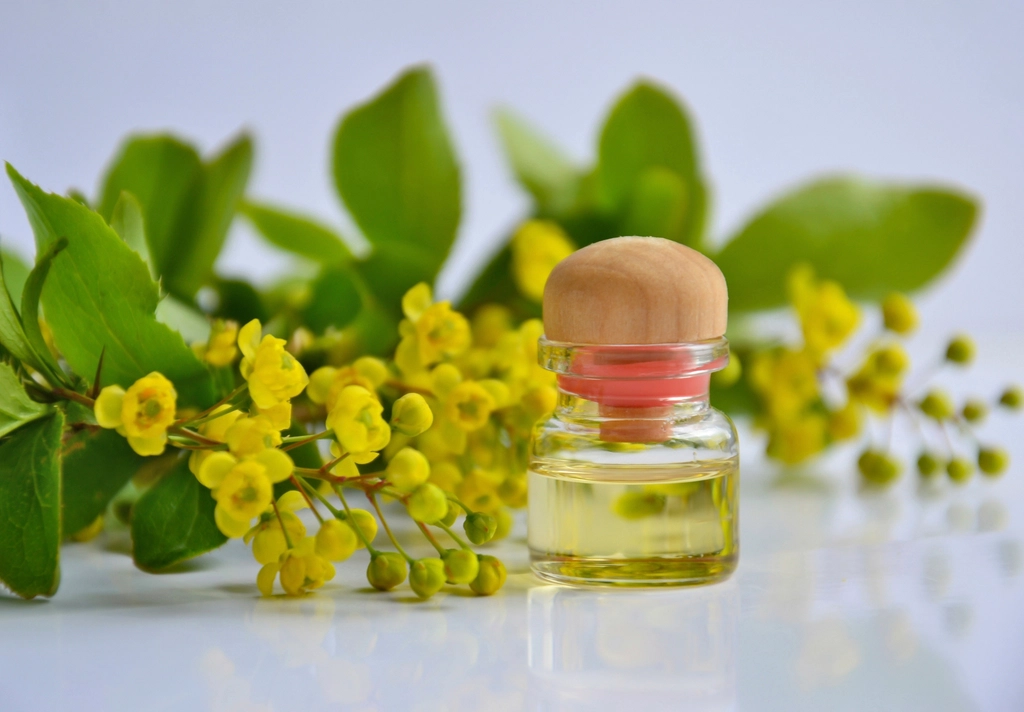
During my experiences of explaining to others about the world of natural medicine, I once had a conversation with someone who, upon learning I was studying natural medicine, said “The stuff with essential oils, right?” While this was definitely a broad generalization of the field, in some regard, she was right! The use of essential oils is a form of natural medicine, but its properties expand beyond more than what the general public may be aware of.
Essential oils have become popular in advertising so businesses can appeal to a growing market of consumers that do not want, or are allergic to, artificial fragrances. Note: “made with essential oils” does not guarantee no chemical-based fragrances were used. Always read the ingredients! However, the earliest recorded use of essential oils for healing dates back to 4500 BCE, with oils such as myrrh, cinnamon, and cedar.
Before we delve into what gives essential oils their medicinal properties, allow me to first define what an essential oil is. An essential oil is a highly concentrated form of a plant, produced by extracting its oils. This high concentration allows for the plant’s healing properties to be enhanced and thus more potent. Essential oils are commonly used as topical ointments, in steam distillers or steam inhalation, or through ingestion. Below I have listed some essential oils that have aided me in the past and how I have used them:
~ Peppermint: Peppermint has been my most used essential oil since I have discovered the medicinal uses of essential oils. Its versatile properties and abundant benefits have proven to help me in most scenarios, from bloating, bodily pain, and acne. These properties are due to menthol, the key component in peppermint leaves, which is anti-inflammatory, anti-microbial, and antioxidant. You can read more about its medicinal properties in my last blog post.
~ Clove: A common ingredient in Indian chai, clove is a great natural remedy for toothaches and mouth infection. I typically drop 5-10 drops of clove oil on a cotton swab, hold it on the affected or paining area, and leave it on for a few minutes or until the pain subsides. For first time users, dilute the essential oil with a carrier oil (i.e. coconut, oil, jojoba oil, almond oil) to avoid irritation.
~ Tea Tree: Similar to peppermint, tea tree essential oil has a variety of properties, including antifungal, antimicrobial, and anti-inflammatory. Due to its antifungal properties, I will often add a few drops to my homemade shampoo or hair oils to combat dandruff. More commonly I will use it as a natural spot treatment, applying the oil on acne. Again, dilute the essential oil before application.
~ Lavender: Lavender, while well-known for its fragrance, also has medicinal properties! Lavender’s scent can relieve anxiety and calm the nervous system, aiding in sleep and reducing stress. Further, lavender can also be applied topically to alleviate pain. I apply lavender oil with a carrier oil around my lower stomach to relieve cramps and relax my mind during menstrual cycles.
These essential oils are only a few of the hundreds more, each with their distinct and potent properties. Essential oils are just one example of how a variety natural remedies are easily accessible to the general public, able to cure various ailments, and just waiting to be discovered by you!